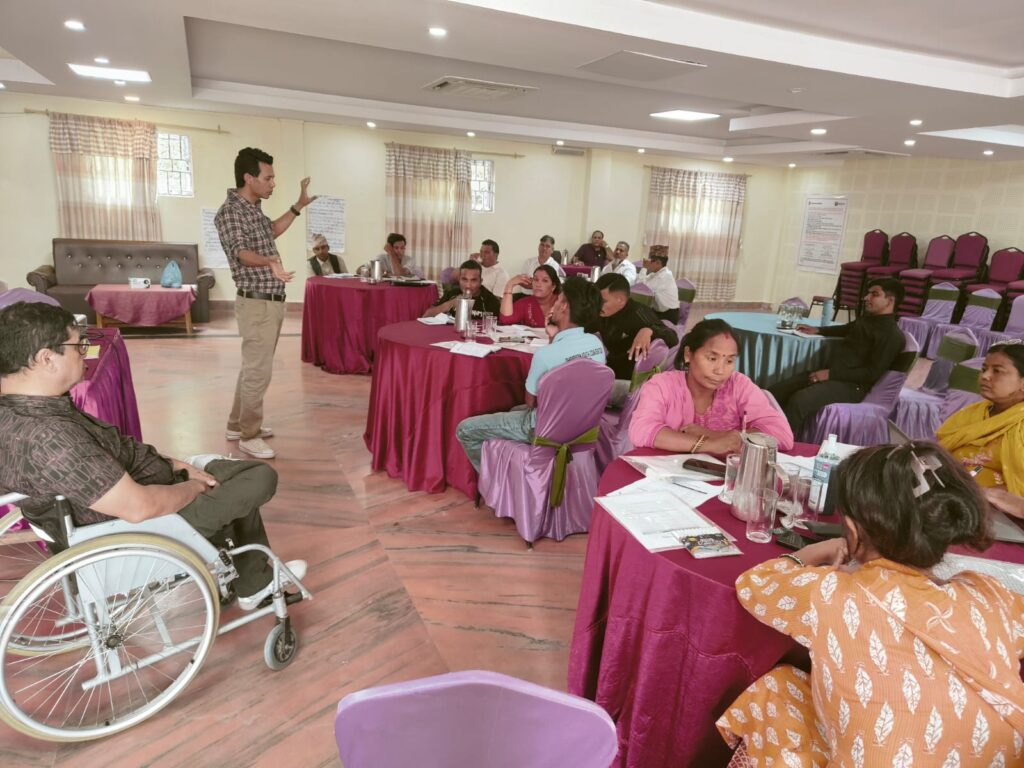
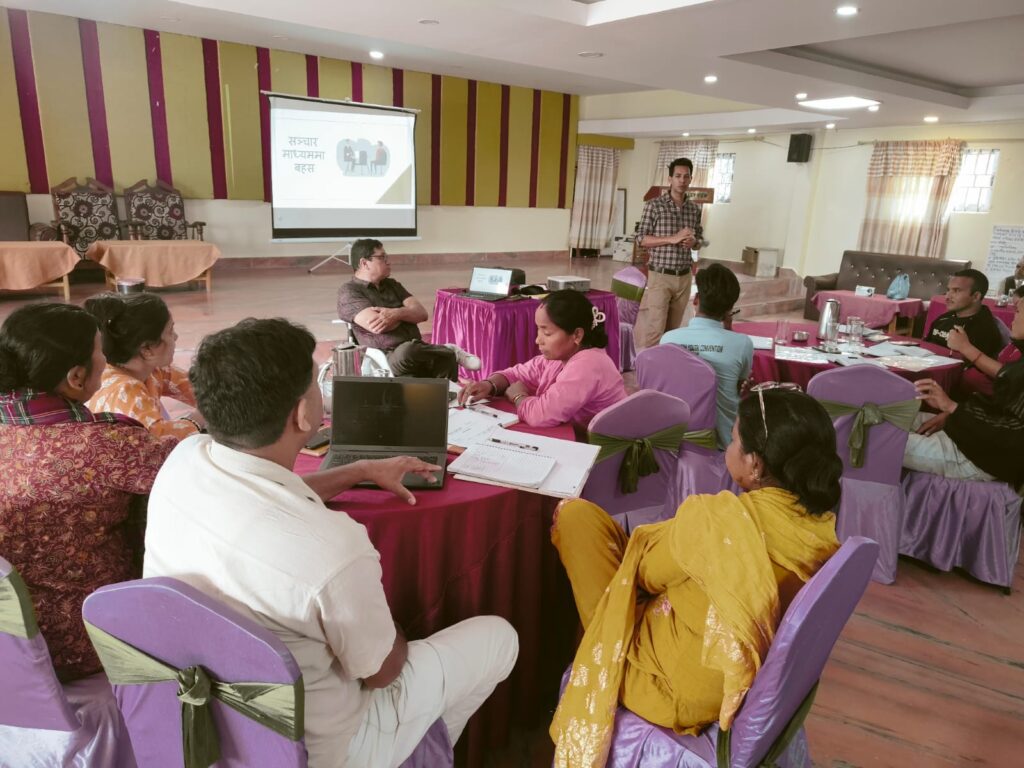
As part of the "Leaving No One Behind: Strengthening Civil Society in Nepal to Drive Inclusive Access to Education for All Children" project, the Resource Center for Rehabilitation and Development (RCRD) facilitated a two-day CSO Capacity Building Training on 14–15 July 2026 at Stay Hotel Valley View, Gothikanda, Surkhet. The training was organized by the Nepal National Social Welfare Association (NNSWA) with support from Save the Children to strengthen the technical and institutional capacities of Civil Society Organizations (CSOs) working to promote disability-inclusive education.
Representing RCRD, Mr. Kirtan Shrestha Duwal, MEAL Officer, and Mr. Manish Prasai, Project Coordinator, served as the lead facilitators throughout the training. The event brought together representatives from six partner CSOs, with two participants each from Kalikot, Jajarkot, and Kanchanpur districts. The project's Education Officer also participated throughout the training, providing technical guidance and contributing to discussions. The diverse participation created a valuable platform for cross-learning, networking, and exchanging experiences among organizations working in different geographical contexts.
During the two-day program, participants strengthened their understanding of inclusive education, disability identification, and the barriers that prevent children with disabilities from accessing quality education. The sessions highlighted practical approaches to promoting disability inclusion at both school and community levels while reinforcing the importance of creating inclusive learning environments where every child can participate meaningfully.
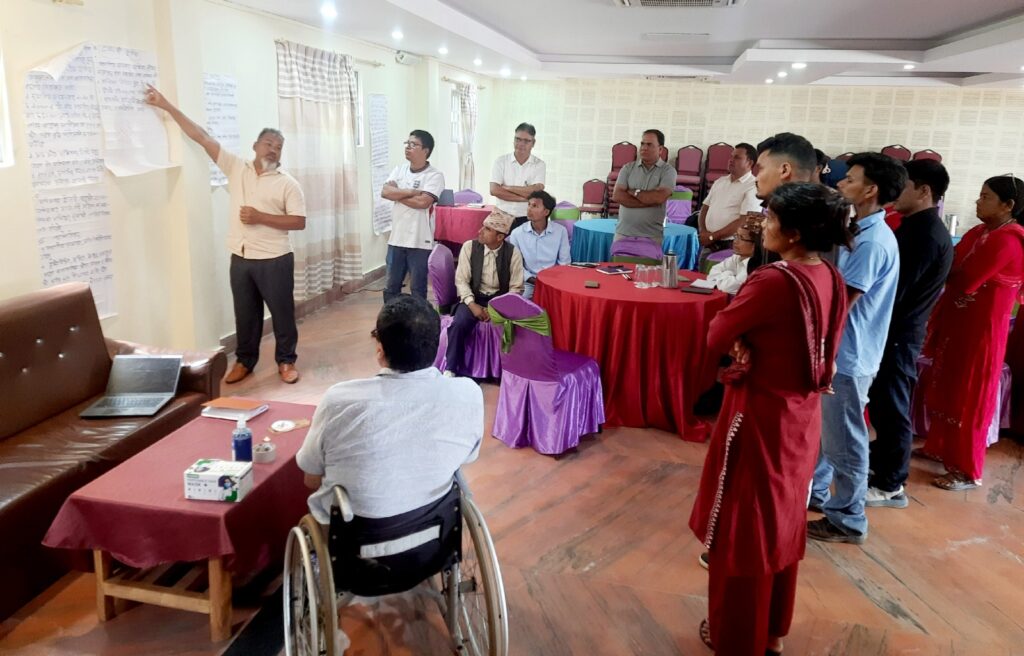
In addition to technical knowledge on inclusive education, the training focused on enhancing the organizational capacity of participating CSOs. Sessions covered key topics including advocacy concepts and strategies, advocacy planning, resource mapping, proposal writing, fundraising, and networking and partnership development. Participants also engaged in experience-sharing sessions, presenting their organizations' achievements, challenges, and promising practices. Practical exercises on presentation skills and the Seven-Step Planning Process enabled participants to develop realistic action plans that can be implemented within their respective organizations.
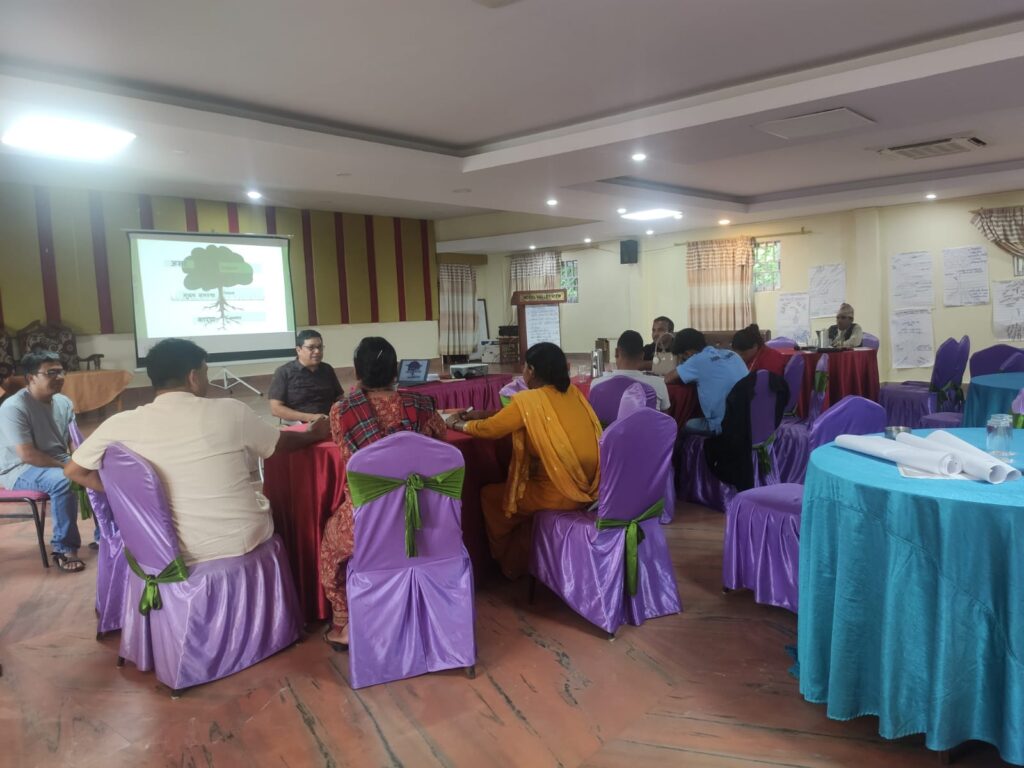
The training adopted a highly participatory approach, combining presentations, group discussions, practical exercises, case studies, and experience-sharing sessions. These interactive learning methods encouraged active engagement and helped participants relate the concepts to their own organizational and community contexts.
The training concluded with participants expressing increased confidence in applying the knowledge and practical tools gained during the sessions. They emphasized that the skills acquired would strengthen their advocacy efforts, improve organizational effectiveness, and support the implementation of more inclusive education initiatives for children with disabilities in their respective districts.
Through its technical partnership in the project, RCRD continues to support local civil society organizations in strengthening disability-inclusive education systems and promoting equitable learning opportunities for all children, ensuring that no child is left behind.